Operating a boom lift requires safety adherence, equipment familiarity, and compliance with OSHA (U.S.) and EN 280 (EU) standards. This concise guide breaks down the process for construction workers, facility managers, and first-time operators, covering critical pre-operation checks, step-by-step use, emergencies, and maintenance.
-
Safety: Falls from aerial lifts cause ~26% of construction fatalities (OSHA data)—proper use drastically reduces this risk.
-
Cost Savings: Misuse leads to boom collapse or hydraulic failure, requiring expensive repairs or replacement parts.
-
Compliance: Certified training is mandatory—non-compliance results in fines, project shutdowns, or legal liability.
Skip these at your peril—they prevent accidents before they start:
-
Boom & Platform: Check for cracks, dents, or corrosion. Ensure safety rails are intact and the floor is non-slip.
-
Hydraulics/Pneumatics: Look for oil/air leaks around hoses and cylinders. Confirm fluid levels match manufacturer specs.
-
Wheels & Base: For mobile models, inspect tires for wear or punctures. Verify outriggers (if equipped) are functional.
-
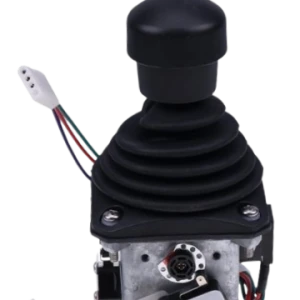
Controls: Test ground and platform controls (joysticks, emergency stops) for responsiveness.
-
Fall Protection: Check platform anchor points. Ensure your harness has no frays or expired certifications.
-
Stability Systems: Confirm tilt sensors, load sensors, and emergency lowering work (refer to the operator’s manual).
-
Alarms/Lighting: Test warning lights, horns, and backup alarms—critical for busy jobsites.
-
Terrain: Park on level ground (max 5° slope) that supports the lift’s weight. Avoid soft ground or potholes.
-
Obstacles: Clear overhead hazards (power lines, trees) and debris. Maintain a 10-foot distance from power lines (OSHA rule).
-
Weather: Avoid operation in >25 mph winds, rain, snow, or extreme temperatures (<0°F/>100°F).
- Confirm you hold a valid boom lift operator certification (OSHA requirement).
- Review the operator’s manual for model-specific rules (load capacity, reach limits).
- Check the maintenance log for unresolved issues.
- Wear PPE: hard hat, safety shoes, high-visibility vest, and gloves. Avoid loose clothing or jewelry.
- Brief the crew on movement plans, emergency steps, and communication signals (e.g., hand gestures).
Once pre-checks pass, follow these steps for safe operation:
- Park on level ground. For rough terrain models: engage the parking brake and extend outriggers fully (use rubber pads on soft surfaces).
- For towable lifts: unhitch from the vehicle and chock the wheels.
- Position the lift so the boom reaches the work area without repositioning mid-task.
- Turn on the main power switch (base or platform). Wait for system initialization and check for error lights.
- Use the lockout switch to toggle between ground and platform controls. Beginners should practice with ground controls first.
- Conduct an empty-platform “dry run”:
- Extend the boom slowly (vertically and horizontally) to test smooth movement.
- Tilt the platform slightly (if possible) to check control responsiveness.
- Test emergency lowering (typically a hand pump, per the manual).
- Stop immediately if you hear grinding, squealing, or feel vibrations.
- Ensure the total load (workers + tools) does not exceed the platform’s rated capacity (found on the data plate).
- Workers enter one at a time, stand firmly, and clip their harnesses to the anchor points.
- Lift slowly to avoid platform swing. Raise to just below the work area, then adjust horizontally. Never lean off the platform.
- Communicate with the ground crew via two-way radios or pre-agreed signals.
- Reposition by lowering the platform slightly before adjusting the boom—no sudden moves.
- Keep both hands on the controls; never hold tools while moving the boom.
- Never stand on platform rails or use ladders for extra height (OSHA violation).
- Secure all tools and materials—do not leave items on the platform while lowering.
- Lower the boom slowly, retract it fully, and lock it in place.
- Turn off power, engage the parking brake, and retract outriggers.
- Conduct a post-operation inspection and note any damage or leaks in the maintenance log.
-
Overloading: Exceeding capacity causes most collapses—weigh tools and workers first.
-
Ignoring Weather: High winds tip lifts—follow manufacturer wind limits.
-
Leaning Off Platforms: OSHA-banned—use the boom’s reach instead.
-
Skipping Pre-Checks: Small issues (e.g., leaks) lead to major failures.
-
Unauthorized Operation: Only certified users should operate lifts.
-
Miscalculating Clearance: Collisions with overhead hazards are avoidable with proper scouting.
-
Power Outage: Use the emergency lowering system (hand pump or battery backup) to lower the platform slowly.
-
Boom Jam: Turn off power—do not force controls. Call a certified technician.
-
Tilt/Instability: Stop movement, lower the platform immediately, and evacuate the area.
-
Fall Risk: If a harnessed worker falls, lower the platform safely—never attempt an aerial rescue.
-
Daily Checks: Repeat pre-operation inspections every time you use the lift.
-
Fluid Monitoring: Top up hydraulic fluid, engine oil, and coolant as needed.
-
Component Care: Lubricate moving parts (booms, hinges) and replace worn hoses or cables promptly.
-
Storage: Keep the lift in a dry, covered area with the boom retracted.
-
Genuine Parts: Use OEM or compatible parts (e.g., CDE Lift Parts) for repairs to ensure safety and performance.
Safe boom lift operation hinges on training, preparation, and vigilance. By following this guide, you’ll minimize risks, stay compliant, and extend your equipment’s lifespan. For reliable maintenance parts (hydraulics, safety rails, controls) for JLG, Genie, or Skyjack lifts, trust CDE Lift Parts—our OEM-compatible parts keep your operations running smoothly.
Stay safe, stay certified, and master boom lift operation with these essential steps.