




JLG Scissor Lift Brake Failure: Diagnosis and Replacement Part Guide
The Hidden Risks of Unresolved JLG Scissor Lift Brake Malfunctions
A scissor lift that fails to hold on a graded surface is an incident report waiting to happen. For fleet managers running JLG GS-series electric scissor lifts — GS-1530, GS-1932, GS-2046, GS-2646, and GS-3246 — unresolved brake faults create a trifecta of risk: operator injury liability, regulatory penalties, and rental fleet downtime.
Every GS-series machine runs two independent brake systems:
-
Hydraulic service brakes (drive brakes): Wet-disc or drum-style units integrated into the wheel motors; engage automatically on joystick release.
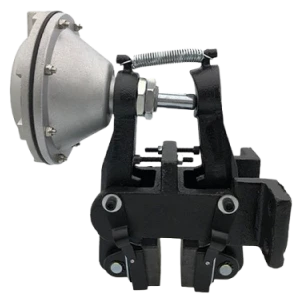
Mechanical parking brakes: Spring-applied, hydraulically released (SAHR) units that lock automatically on power-down or emergency stop activation. - This guide covers the key failure warning signs, a safe LOTO-compliant diagnostic workflow, and the five brake replacement part categories every fleet service van should stock. Model-matched OEM-equivalent components are available in our JLG brake parts catalog.
Why Brake Failures Are One of Your Fleet's Costliest Headaches
A single unplanned brake failure on an active rental machine adds up fast:
- Emergency field service call-out: $400–$900
- Lost rental revenue (GS-2646 / GS-3246 class): $180–$350/day
- Expedited parts freight: $75–$200
- OSHA serious violation fines: from $15,625 per citation
Root causes that accelerate wear on construction fleet machines:
- Dust and concrete debris: Abrades pad surfaces and piston bores
- Rain, salt, and coastal corrosion: Causes caliper seizure and fitting failure
- Ozone and UV exposure: Degrades rubber O-rings and hydraulic hose compounds
- High rental cycle frequency: Compounds wear far beyond standard maintenance assumptions
Compliance baseline: In North America, OSHA 29 CFR 1910.147 and ANSI/SAIA A92.22 mandate pre-shift inspection and documented brake checks. In Europe, PUWER 1998 Regulations 6/9 and LOLER 1998 require maintained equipment, formal inspections, and records retained for a minimum of two years. In both jurisdictions, undocumented faults and missed inspections are enforceable violations.
Key Warning Signs That Your JLG Scissor Lift Brakes Are Failing
Train operators to report any of the following immediately:
- Parking brake cannot hold on a graded surface: Insufficient SAHR spring tension — caused by spring fatigue, contaminated disc surfaces, or hydraulic release pressure not fully venting. Do not return to service until resolved.
- Extended stopping lag after joystick release: Service brakes should engage almost immediately. Noticeable coasting indicates worn friction material, reduced hydraulic pressure, or brake piston drag.
- Hydraulic fluid seepage at wheel brake hubs: Wetness at the hub or rim points to a failing brake cylinder seal or cracked fitting. Fluid loss directly reduces actuation pressure.
- Grinding or scraping noise during deceleration: Friction material worn through to the backing plate, or a broken/misaligned brake shoe. Continued operation will damage the drum or disc surface.
- Brake fault error codes on the dashboard: GS-series diagnostics log faults across drive motor brake circuits, parking brake solenoids, and hydraulic pressure sensors. Cross-reference the fault code against the JLG service manual — some codes are sensor faults, not mechanical failures.
- Machine pulling to one side during travel: Seized caliper or uneven pad wear between left and right assemblies. Always inspect both sides simultaneously.

Step-by-Step Safe Brake Diagnosis Workflow (IPAF Lockout/Tagout Compliant)
Step 1: Complete LOTO Lockout Procedure
- Fully lower platform to stowed position — never perform brake work with the platform elevated
- Power down, remove key, apply personal LOTO lock to battery isolator (rear access panel on GS-series)
- Chock all four wheels with proper wheel chocks — not makeshift blocks
- Attach "Do Not Operate" tag at the control station and battery isolator
- Verify zero energy state: attempt power-on, confirm zero residual hydraulic pressure
Step 2: External Visual Inspection
- Brake hubs, drums, and discs: Check for scoring, cracks, hot spots (blued metal), and fluid contamination — investigate source before proceeding
- Hydraulic brake hoses: Look for cracking, bulging, abrasion, and fitting corrosion; surface cracking signals early ozone degradation
- Threaded hydraulic fittings: Tighten to JLG factory spec if loose; replace fitting or seal if leaking
- Parking brake cables and springs: Check for fraying, kinking, end-fitting corrosion; verify spring tension against service manual
Step 3: Static Parking Brake Holding Test
Temporarily remove LOTO (second competent person present). Elevate platform 1–2 feet, engage parking brake, and verify zero movement for a minimum of 5 minutes on level ground, then repeat on a graded surface (minimum 15% slope). Re-apply LOTO and document both results before proceeding.
Step 4: Hydraulic Service Brake Pressure Testing
Connect a calibrated pressure gauge at the brake line test port (location and thread size in the model-specific JLG service manual). Record static brake circuit pressure against JLG factory spec — values vary between GS-1530 and GS-3246. Actuate and release the drive control; monitor pressure decay. Low static pressure indicates a relief valve or pump issue; slow decay points to a leaking brake piston seal.
Step 5: Disassemble Wheel Brake Housing
- Remove wheel and hub cover to access the brake assembly
- Pad/shoe friction material: Replace at less than 2mm remaining
- Brake piston movement: Sticking pistons indicate O-ring deterioration or bore contamination
- O-rings and seals: Replace every seal removed — never reuse
- Drum/disc surfaces: Measure for wear beyond tolerance; inspect for scoring
Step 6: Match Symptoms to Replacement Parts
| Observed Fault | Required Part Category |
| Hydraulic leak at hub | Brake cylinder O-ring & seal repair kit |
| Metal-on-metal noise, poor stopping | OEM-spec brake pad / shoe set |
| Seized, corroded brake assembly | Complete pre-assembled wheel brake unit |
| Parking brake won't hold | Parking brake cable, spring & tensioner kit |
| Cracked or ozone-damaged hose | Reinforced hydraulic brake hose assembly |

Must-Stock JLG Brake Replacement Parts for Every Fleet Service Van
Stock these five categories for your highest-volume GS models. The difference between a 2-hour field repair and 3 days of machine downtime usually comes down to whether the right part is already in the van.
1. Brake Cylinder O-Ring & Full Seal Repair Kits
The most frequent failure point on outdoor rental machines. A complete JLG brake seal kit covers every O-ring, piston seal, and boot in the cylinder assembly. Replace the full kit at each overhaul — piecemeal replacement leaves ageing components in place.
2. OEM-Spec Brake Pad / Shoe Sets
Worn or fluid-contaminated friction material must be replaced, not cleaned. Our OEM-equivalent JLG brake pads match the friction coefficient and dimensional tolerances of original JLG components across all GS-series models. Always replace in axle pairs to maintain even braking force.
3. Complete Pre-Assembled Wheel Brake Units
For scored drums, corroded hubs, or damaged piston bores, a complete JLG wheel brake assembly eliminates field rebuild time and reassembly risk. Essential van stock for coastal and high-humidity fleets.
4. Parking Brake Cable, Spring & Tensioner Kits
Cable fraying, spring fatigue, and tensioner seizure all manifest as reduced holding force before complete failure. A full parking brake repair kit — cable, spring, tensioner, and hardware — enables a complete mechanical rebuild from van stock.
5. Reinforced Hydraulic Brake Hose Assemblies
Replace proactively on any hose showing surface cracking, abrasion near fittings, or over 5–7 years old on a high-cycle machine. Our MSHA-rated assemblies offer improved ozone and abrasion resistance.
Fleet tip: Standardise one SKU per part category per GS model variant across all depots to eliminate emergency freight costs and inter-depot shortages.
Critical OSHA & IPAF Compliance Rules for JLG Brake Replacement
Mandatory PPE during brake service:
- Safety glasses or face shield (hydraulic pressure release risk)
- Chemical-resistant gloves (hydraulic fluid is a prolonged-exposure skin irritant)
- Steel-toed safety footwear
- Hi-vis vest in active job site environments
Non-OEM component risk: OSHA's General Duty Clause and PUWER Regulation 6 both require equipment maintained to fit-for-purpose condition. Non-spec pads or non-rated hoses that contribute to a subsequent failure will be scrutinised in any incident investigation. Specify OEM-equivalent parts from suppliers who can provide material certification for audit.
Torque standards: Every brake hub fastener must be torqued to the JLG service manual specification — under-torqued fasteners back out under vibration; over-torqued fasteners distort housings and affect piston geometry. Critical points: wheel hub mounting bolts, caliper/anchor plate bolts, and hydraulic fittings. Always use a calibrated torque wrench; never use an impact driver for final brake assembly torque.
Post-repair functional test checklist — document all results before returning to service:
- Hydraulic system pressure confirmed at specification
- Service brake engagement/release: immediate response, no delay or drag
- Static parking brake hold: level and graded surface, 5 minutes each
- Full-speed drive and emergency stop test in a clear area
- Operator controls and safety interlock functional check
- Visual leak inspection at all serviced connections post-test
Record-keeping: US fleets should retain inspection and maintenance logs per ANSI/SAIA A92.22 — missing records support a negligence finding in any OSHA investigation. UK/EU fleets must retain LOLER thorough examination reports for a minimum of 2 years; PUWER records must be produced on demand. Failure to produce either is a prosecutable offence independent of the underlying fault.
Conclusion: Protect Your Operators, Your Fleet, and Your Compliance Record
Brake failures on JLG GS-series scissor lifts are predictable, diagnosable, and preventable. The essentials:
- Inspect proactively — quarterly minimum for high-cycle rental units under both OSHA/ANSI and IPAF/PUWER frameworks
- Stock OEM-equivalent brake seal kits, brake pads, wheel brake assemblies, and parking brake repair kits for your highest-volume GS models
- Document every inspection, repair, and post-repair test — this record is your legal protection


